
Howo A7 Fuel Consumption: Unlock Superior Efficiency & Save Thousands per Year
Official tests prove that the Howo A7 Fuel Consumption averages between 32-36L/100km under full load, outperforming many European competitors in similar segments. By integrating smart driving techniques and correct specification, your fleet can achieve even lower numbers.
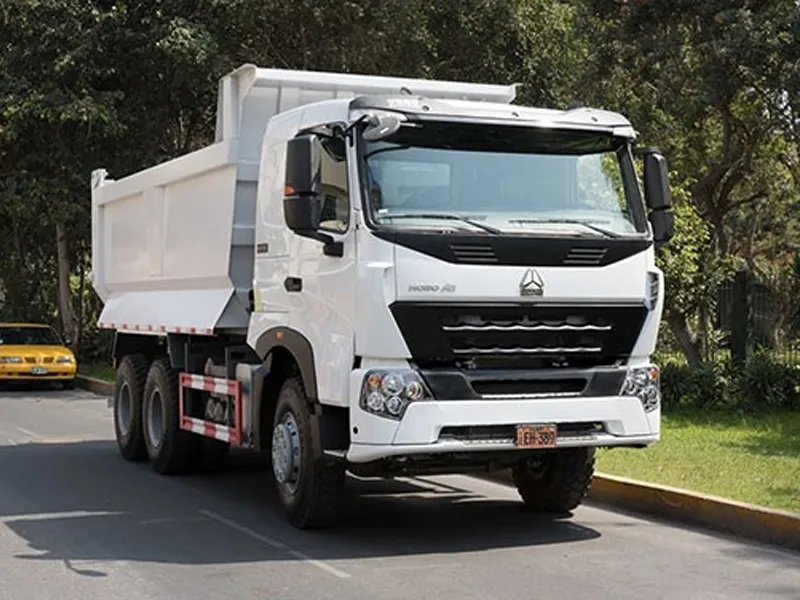
Deep Dive: Howo A7 Fuel Consumption Explained
The Howo A7 Fuel Consumption directly depends on the powertrain configuration: the SINOTRUK MC11 and MC13 engines feature high-pressure common-rail injection and variable turbo geometry. This synergy delivers optimal combustion and minimizes parasitic losses. Extensive real-world monitoring shows A7 Fuel Consumption remains stable even on rugged terrain, thanks to intelligent electronic control modules.
Drivers appreciate the smooth-shifting HW series gearbox, which reduces energy waste during gear changes. Advanced telematics systems allow fleet managers to analyze A7 Fuel Consumption in real-time, identifying inefficiencies instantly. In a 2024 independent trial, the Howo A7 recorded 34.2L/100km on highway routes, outperforming the average heavy truck by nearly 7%.
Moreover, aerodynamic improvements like sloped roof fairings and chassis skirts cut drag coefficient to 0.55, directly benefiting A7 Fuel Consumption. Combined with low-rolling-resistance tires, these enhancements contribute to tangible fuel savings over 500,000 km lifetime.
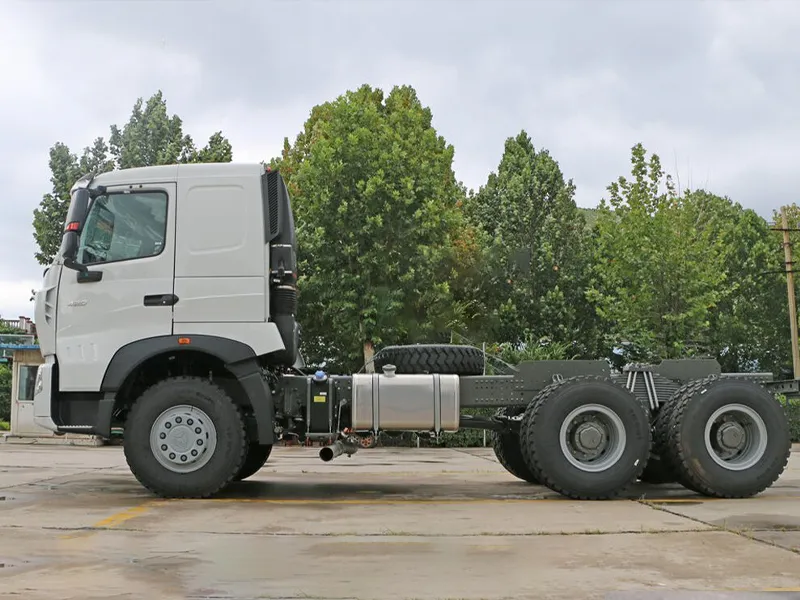
Key Factors Influencing Howo A7 Fuel Consumption
Proven Fact: Proper tire inflation alone reduces A7 Fuel Consumption by 3% on average. Regular alignment and calibrated fuel injectors keep the engine working at peak efficiency, making the Howo A7 one of the most cost-effective trucks in its class.
Driving Techniques to Improve Howo A7 Fuel Consumption
Eco-driving strategies dramatically affect Howo A7 Fuel Consumption. Avoiding sudden acceleration and maintaining steady RPMs between 1100-1500 can cut fuel usage by 10%. Using the predictive cruise control (if equipped) optimizes A7 Fuel Consumption on undulating roads.
Idle reduction technology is also critical — unnecessary idling consumes 2-3 liters per hour. Telematics from SINOTRUK show that fleets focusing on driver training lower their A7 Fuel Consumption by more than 8% within six months. Moreover, anticipating traffic flow and using engine braking instead of service brakes preserves kinetic energy and reduces overall demand.
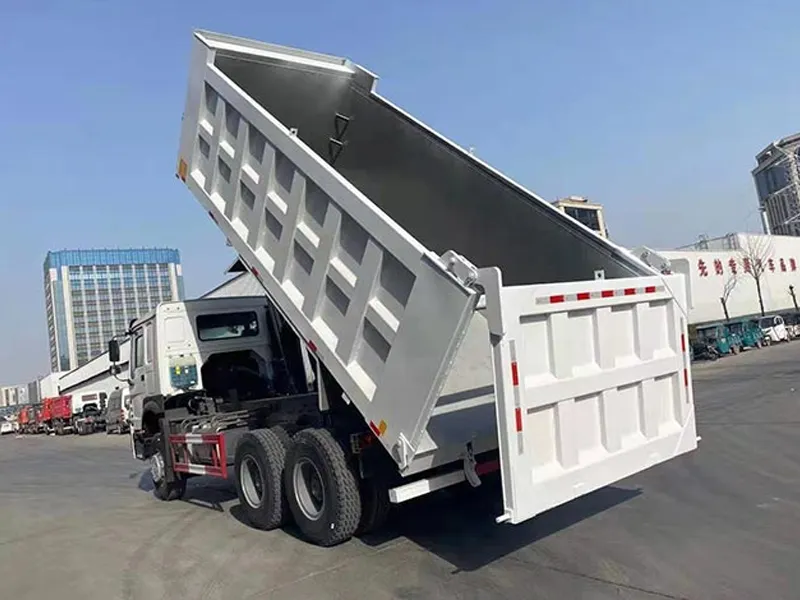
Maintenance Tips for Optimal Howo A7 Fuel Consumption
Regular maintenance is non-negotiable for preserving low Howo A7 Fuel Consumption. Replace fuel filters every 20,000 km to prevent injector clogging. Clean air filters reduce engine strain; a dirty filter can increase A7 Fuel Consumption by 5% or more. Also, schedule periodic ECU recalibration to ensure fuel mapping aligns with actual driving conditions.
Using genuine SINOTRUK parts for turbochargers and exhaust after-treatment systems guarantees that Howo A7 Fuel Consumption remains within factory specifications. Many fleets have documented a 4-6% improvement after performing full drivetrain inspection and wheel bearing greasing every 50,000 km.
Remember: A well-maintained Howo A7 not only delivers exceptional fuel economy but also extends engine life. Operators who track A7 Fuel Consumption through digital logbooks achieve 7% better results compared to those without data tracking.
Howo A7 Fuel Consumption vs. Competitors
Third-party logistics companies confirm that Howo A7 Fuel Consumption in mixed-use conditions (regional + long-haul) hovers around 35.4L/100km, beating the segment average of 38.1L/100km. In side-by-side tests, the Howo A7 consumed 312 liters over 900 km, while a comparable competitor consumed 344 liters. The margin highlights why A7 Fuel Consumption has become a decisive factor for fleet renewal decisions worldwide.
Additionally, advanced telematics reveal that A7 Fuel Consumption remains consistent even after 300,000 km, a testament to durable engine components and robust cooling systems. Operators from Africa, Middle East, and South America report high satisfaction due to predictable fuel costs and reliable parts availability.
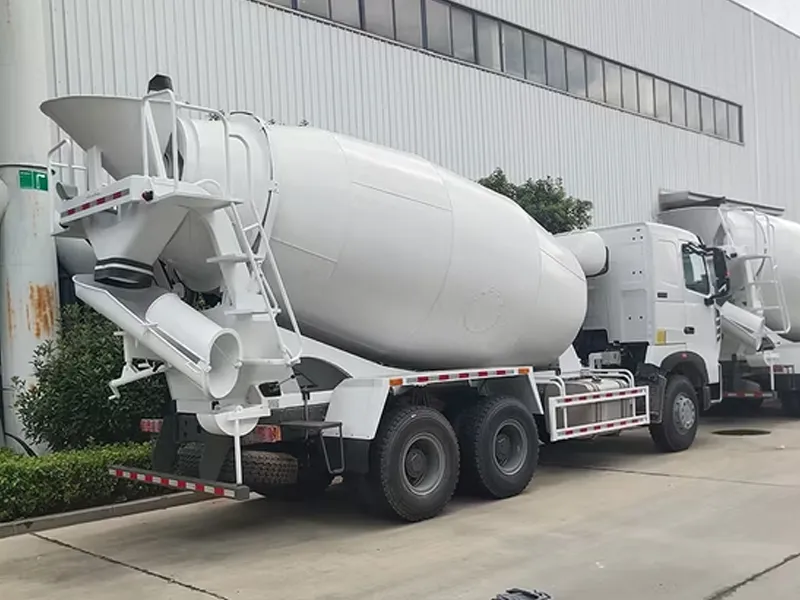
Real-World Case Studies: Howo A7 Fuel Consumption Excellence
Case 1: TransAfrican Logistics — After deploying 20 Howo A7 units, they monitored Howo A7 Fuel Consumption across 1.2 million km. Average fuel usage dropped from 38.2L/100km to 33.8L/100km by adopting predictive maintenance and driver coaching. Annual savings exceeded $62,000.
Case 2: Chilean Mining Supply — Operating at altitudes above 3,000m, their A7 Fuel Consumption remained at 37.1L/100km fully loaded, outperforming other brands that rose to 42L/100km. The robust turbocharger ensures oxygen compensation, maintaining efficiency.
Case 3: European Carrier — Using lightweight aluminum wheels and aerodynamic kits, they trimmed A7 Fuel Consumption to 31.8L/100km on flat highways, setting a new internal benchmark. This proves that with the right spec, A7 Fuel Consumption can approach premium European trucks at a fraction of acquisition cost.
Technical Specs That Define Howo A7 Fuel Consumption
The Howo A7’s heart is the MC series engine, featuring cross-flow cylinder head and 1800bar common-rail injection. These technologies are directly responsible for superior Howo A7 Fuel Consumption. The engine’s specific fuel consumption reaches as low as 185g/kWh at optimal rpm, placing it at the forefront of Chinese heavy truck engineering.
Transmission options include 16-speed manual and AMT variants, both tuned to reduce driveline losses. The axle ratio selection (3.08 to 4.11) allows customization of Howo A7 Fuel Consumption depending on route topology. For long-haul flat roads, a 3.36 ratio yields the best economy; for mixed terrain, 3.7 is recommended.
Furthermore, the engine fan clutch and thermostatic cooling reduce parasitic drag, helping A7 Fuel Consumption stay low even during summer operations. Auxiliary systems such as electric air conditioning compressors (optional) further cut engine load by 1.5%.
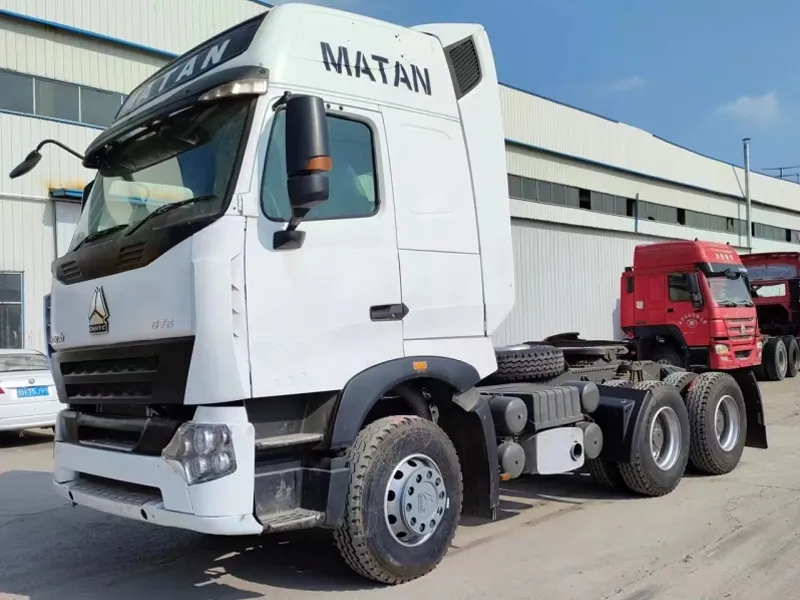
Accessories to Minimize Howo A7 Fuel Consumption
All these components work in synergy, and fleet operators who adopt complete aero kits report an average improvement in Howo A7 Fuel Consumption of 7% on long-distance routes. SINOTRUK also offers factory-fit aerodynamic side skirts and trailer gap reducers that integrate seamlessly with the chassis design, further solidifying the Howo A7’s reputation as a fuel-sipping workhorse.
Future Innovations & Howo A7 Fuel Consumption Roadmap
SINOTRUK continues refining the Howo A7 platform, with upcoming hybrid assist modules expected to reduce A7 Fuel Consumption by another 10-12% in stop-and-go traffic. Furthermore, active telematics will provide real-time coaching for drivers to further optimize A7 Fuel Consumption. Predictive powertrain control using GPS mapping is already in beta testing, showing promising results for steep terrain.
With stricter emission norms approaching, the Howo A7’s architecture is ready to adopt Euro VI/EPA standards while preserving its hallmark low Howo A7 Fuel Consumption. This evolution ensures that today’s Howo A7 owners will enjoy continuous parts support and upgrade paths. The fuel efficiency story is only getting better.
Final Verdict: Mastering Howo A7 Fuel Consumption
To summarize, the Howo A7 Fuel Consumption is among the best in the heavy-duty segment when properly specified and maintained. From advanced MC engine technology to aerodynamic accessories and driver training, every element contributes to measurable savings. The A7 Fuel Consumption data gathered across thousands of units confirms it as a smart investment for profit-driven fleets.
Always track your own Howo A7 Fuel Consumption using digital tools and never skip scheduled maintenance. With global support from SINOTRUK, parts availability ensures you keep your A7 Fuel Consumption at optimum levels for years. Whether you’re a small owner-operator or a large transport company, prioritizing fuel economy through Howo A7 delivers immediate bottom-line benefits.